Context
A professional services firm — architecture and construction — running a WordPress site that was functional but technically exposed. The site was being used as a credential and lead generation tool, meaning its security and credibility directly affected the business.
Problem
SSL Labs grade was not at A. Security headers were completely absent — grade D. For a firm selling professional credibility, a security audit that exposed these gaps would undermine client trust. Beyond perception, the missing headers left the site exposed to clickjacking, MIME sniffing, and cross-site scripting vectors.
Diagnosis
Security audit covering SSL configuration, HTTP response headers, Wordfence status, and WordPress hardening checklist. Performance audit via PageSpeed Insights, GTmetrix, and Chrome DevTools.
Key findings:
Constraints
Implementation
SSL hardened via Cloudflare — TLS configuration updated, HSTS enabled, cipher suites corrected. Grade confirmed via SSL Labs.
HTTP security headers implemented via Cloudflare Rules — all 5 missing headers added and validated via Security Headers tool. Grade D → A.
Performance optimization: WP Rocket installed, caching configured, render-blocking resources deferred, images compressed and converted to WebP format.
Tradeoffs
Implementing HSTS requires confidence that SSL is correctly configured — enabling it on a misconfigured SSL setup can lock users out. SSL was fully validated before HSTS was activated.
Stack
Before / After
| Metric | Before | After |
|---|---|---|
| SSL Labs | C | A |
| Security Headers | D | A |
| Desktop PageSpeed | 66 | 86 |
| GTmetrix Grade | C | B |
| LCP | 7.2s | 2.2s |
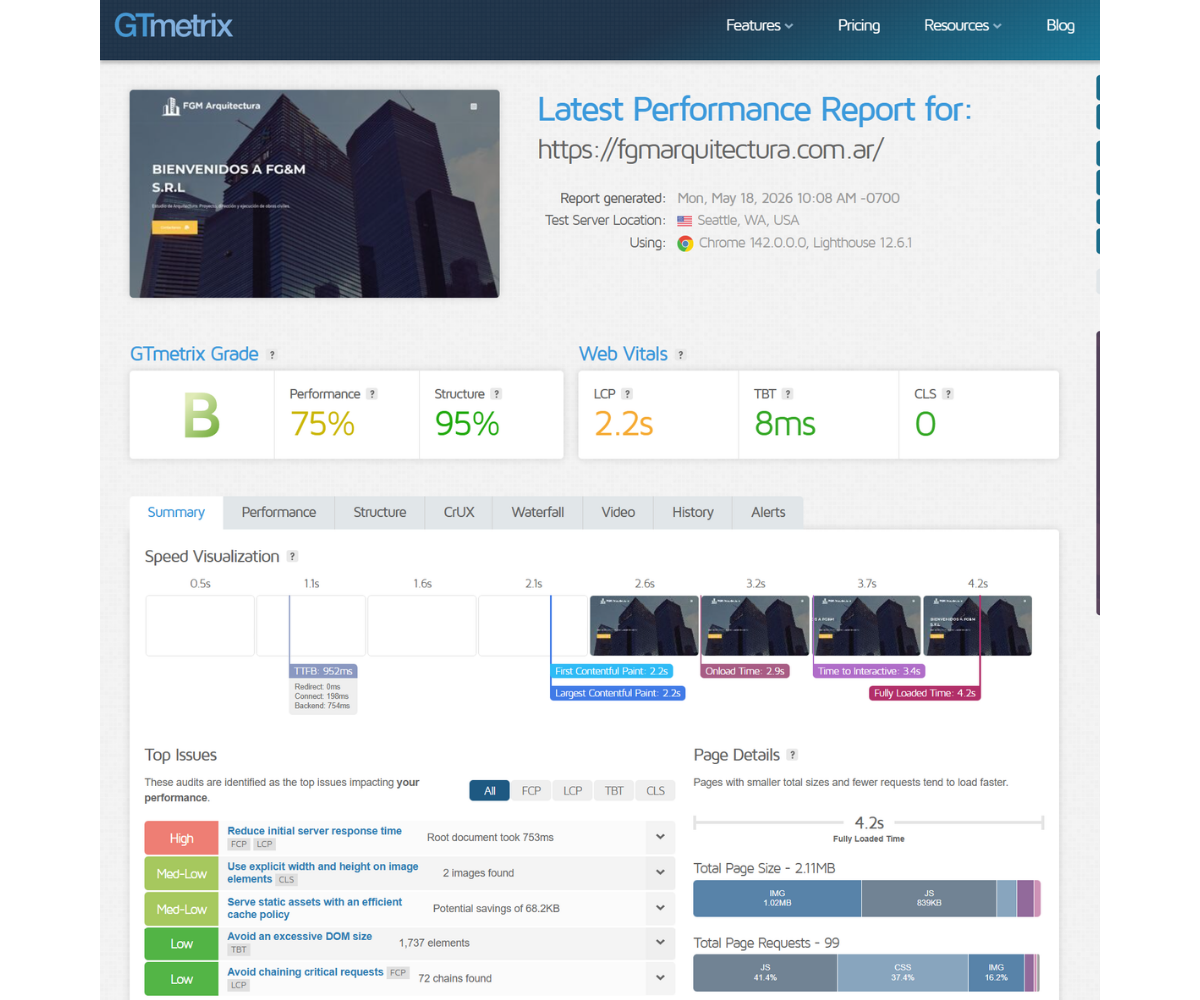
GTmetrix Grade B · Performance 75% · LCP 2.2s · CLS 0 · May 2026
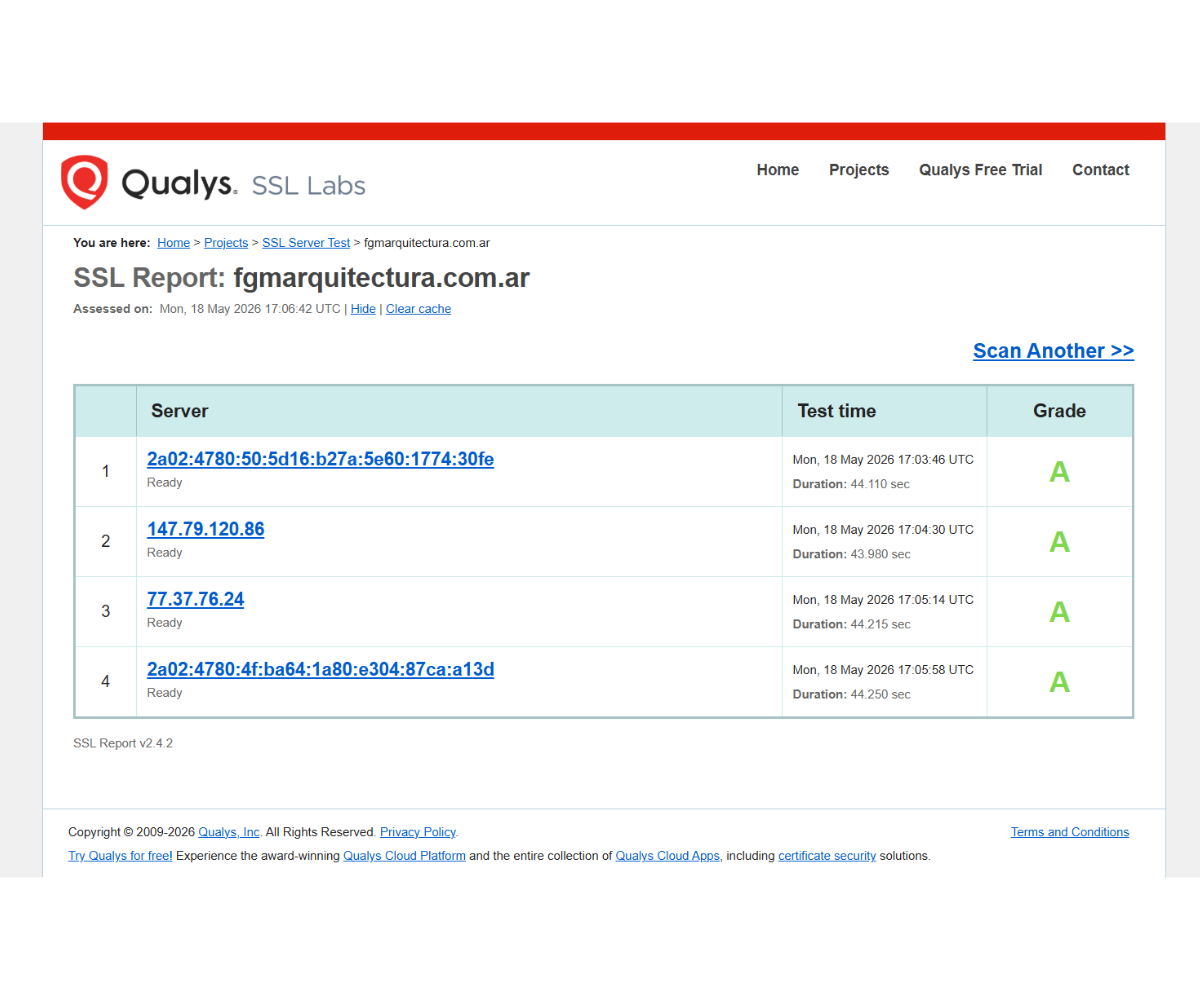
SSL Labs Grade A · 4 servers · May 2026
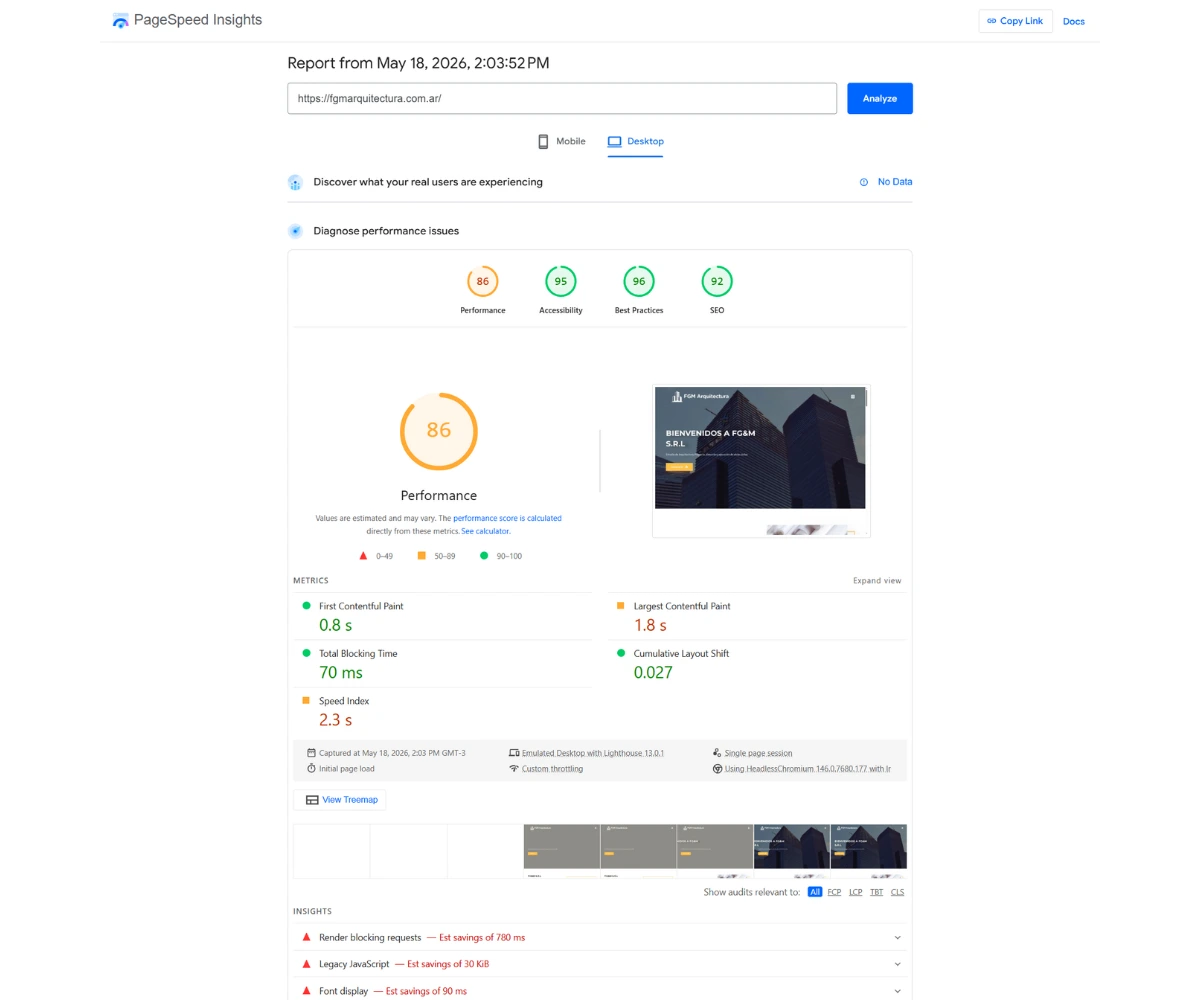
PageSpeed Desktop 86 · Accessibility 85 · LCP 1.8s · May 2026
Outcome
Site secured and hardened. SSL at A, all critical security headers in place. Desktop performance improved significantly. Client delivered a documented security baseline.
Lessons
Security headers are the most overlooked quick win in WordPress. They're invisible to the end user, rarely checked by site owners, and fixable in under an hour via Cloudflare — yet their absence leaves sites exposed to vectors that are trivially easy to exploit.